If your download link is not working, create a support ticket. We will send you a new working download link when we are back.

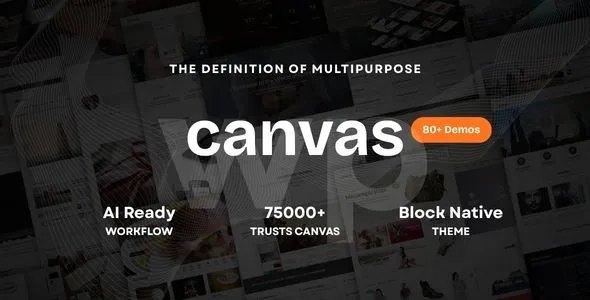
Canvas | The Multi-Purpose AI Theme & Website Builder is a modern website design solution created for businesses, entrepreneurs, creative professionals, digital agencies, freelancers, and online brands looking to establish a powerful digital presence. With an emphasis on flexible website creation, contemporary design, and AI-focused workflows, Canvas is suited to projects that require a professional online identity across different industries and business models. Whether you want to introduce a startup, promote digital services, showcase a creative portfolio, launch a business website, or build a compelling landing page, Canvas offers a starting point for creating a website tailored to your goals.
A professional website is an essential part of building brand recognition, communicating value, and connecting with potential customers. However, creating a website that looks polished and communicates clearly can be challenging without a structured design foundation. Canvas is positioned for users who want a versatile website-building experience that brings design flexibility and modern digital possibilities into one environment.
The multi-purpose concept makes Canvas relevant to a wide variety of website projects. Instead of limiting your website to a single industry, you can shape its visual identity, content, and structure around your business requirements. From startup websites and agency pages to service-based businesses and personal portfolios, Canvas provides a foundation for presenting your ideas in a clear, organized, and engaging way.
Every business has different website requirements. A technology startup may need to explain an innovative product, a marketing agency may want to highlight its services and successful projects, and a freelancer may need a portfolio that demonstrates individual expertise. Canvas is designed around the idea of versatility, making it suitable for a broad range of digital experiences.
A multi-purpose website theme can help simplify the initial design process by providing a starting point for arranging essential website content. You can organize your pages around your business introduction, services, products, portfolio, team, testimonials, blog, and contact information according to the needs of your audience.
This flexibility is particularly valuable for businesses that expect their online presence to evolve. As your organization introduces new services, expands into different markets, or changes its brand positioning, you can adapt your website content and presentation to reflect those developments.
Canvas is a relevant choice for anyone seeking a contemporary website foundation that can be customized to support different creative and commercial objectives.
Artificial intelligence is increasingly influencing how businesses approach content creation, digital design, and online communication. AI-assisted workflows can help users explore ideas, prepare initial drafts, organize information, and develop website content more efficiently.
With its AI-focused positioning, Canvas is suited to website projects that emphasize modern digital experiences and intelligent creative workflows. Businesses can build a website narrative around AI products, automation services, software platforms, digital tools, and technology-driven solutions.
AI-related businesses can use their website to explain complex products in accessible language, communicate their value propositions, introduce use cases, and encourage visitors to request demonstrations or learn more about their services.
For example, an AI startup could organize its website around product benefits, use cases, pricing information, company expertise, and customer inquiries. A digital agency offering AI consulting could highlight its services, describe its approach to business challenges, and showcase relevant projects.
Specific AI generation or automation capabilities depend on the features included in the actual product package and any connected services. Canvas should be customized according to the tools and functionality available in your installation.
A business website serves as a central point for communicating your organization’s identity, services, expertise, and contact information. Canvas can provide a starting point for creating a professional digital presence that reflects your business goals.
Use the website to introduce your company, explain what makes your services valuable, and guide visitors toward the information they need. A clear homepage can communicate your primary offering, identify your target audience, and provide a straightforward path to explore additional pages.
Important business website sections may include:
The exact structure should depend on the type of business you operate. A smaller company may benefit from a concise website with a few essential pages, while a larger organization may need a more comprehensive structure for multiple departments, services, and customer segments.
By prioritizing clarity and useful information, you can create a website that helps visitors understand your business and take the next step.
Startups often need to communicate new ideas, explain emerging products, and establish credibility with potential customers, partners, and investors. Canvas is well suited to website projects that require a modern presentation for innovative products and services.
Technology startups can use their websites to describe software platforms, introduce digital tools, explain business applications, and communicate product benefits. An effective startup homepage should quickly answer three questions: what the company offers, who it serves, and why its solution matters.
You can structure content around product features, customer challenges, solution benefits, implementation approaches, and calls to action. Depending on your business model, these calls to action may encourage visitors to book a consultation, request a product demonstration, join a mailing list, or contact your sales team.
A dedicated company story can also explain the problem that inspired the business, its mission, and the value it aims to deliver. This helps give visitors context while reinforcing your brand identity.
For AI startups, software companies, SaaS businesses, and digital product providers, Canvas can serve as a foundation for a focused and contemporary online presentation.
Digital agencies need websites that demonstrate creativity, explain their services, and build confidence in their ability to deliver results. Canvas can be adapted for agencies working in web development, branding, digital marketing, search engine optimization, UI and UX design, content production, and technology consulting.
A well-structured agency website should communicate both creative ability and business value. Visitors need to understand the services available, the types of clients the agency supports, and how to begin a project.
Consider organizing your website into service categories, portfolio projects, client industries, team information, and contact options. Each service page can explain the challenges you address, your approach, and the potential value of working with your agency.
Portfolio sections can provide examples of your work and explain the objectives behind each project. Where possible, include genuine project details, client-approved images, and measurable results that accurately represent your experience.
Canvas offers a multi-purpose direction for agencies that want to create a consistent digital identity while adapting their website to their particular services and target audience.
Creative professionals need a website that places their work at the center of the visitor experience. Designers, developers, photographers, illustrators, consultants, and other independent professionals can use a portfolio-focused website to present their expertise and communicate their professional identity.
A portfolio should be more than a collection of images or project names. It should help visitors understand the skills, thinking, and experience behind your work.
You can organize projects into relevant categories, provide descriptions of your role, explain the objectives of each project, and include supporting visuals where appropriate. A personal introduction can communicate your background, professional interests, and the services you offer.
A dedicated contact section makes it easier for potential clients and collaborators to discuss opportunities. You can also link to professional profiles, publish articles, or provide selected resources that demonstrate your expertise.
With appropriate customization, Canvas can support a portfolio website that evolves as your skills develop and your body of work expands.
Landing pages are useful when a business wants to promote a particular product, service, campaign, event, or offer. Their primary purpose is to focus attention on a specific objective and guide visitors toward a clear action.
Canvas can be used as a foundation for developing landing pages for product launches, software subscriptions, consulting services, marketing campaigns, webinar registrations, and other promotional activities.
A well-planned landing page usually includes a clear headline, an explanation of the offer, relevant benefits, supporting visuals, trust-building information, and a prominent call to action. The page should answer the questions a visitor is likely to have before making a decision.
For example, a software company may use a landing page to explain a product’s intended audience, core benefits, and available plans. A consulting business may focus on the challenges it solves and invite visitors to schedule an introductory conversation.
For better campaign performance, align the page content with the advertisement, email, or promotional message that brings visitors to it. Keep the primary objective clear and avoid unnecessary distractions.
A recognizable brand identity helps businesses communicate consistently across their website and other digital channels. Canvas can be adapted to reflect your organization’s visual style, messaging, and positioning.
Customization may involve adjusting the color palette, typography, logo placement, imagery, written content, page organization, and calls to action, depending on the theme’s available controls.
Choose colors and typography that suit your audience and industry. A technology company may prefer a clean, contemporary presentation, while a creative studio may use more expressive visuals to communicate its personality.
Consistency is equally important across individual pages. Your navigation, headings, buttons, images, and messaging should feel like parts of the same experience. This helps visitors move through your website without having to relearn its structure on every page.
Replace generic or demonstration content with accurate information about your organization. Original text, relevant visuals, and a consistent brand voice can make a substantial difference to the finished website.
An effective website should help visitors find information and complete tasks without unnecessary effort. Attractive visuals are valuable, but usability should remain a central consideration throughout the design process.
Canvas can serve as a foundation for organizing content into a logical hierarchy. Start with the information your audience needs most, use descriptive navigation labels, and make important actions easy to identify.
Consider the following user experience principles:
A clear user experience can help visitors understand your offering, evaluate your business, and move naturally toward the next step.
Visitors may access your website from desktop computers, laptops, tablets, and smartphones. A responsive design helps content adapt to different screen sizes and supports a more convenient browsing experience.
When preparing a Canvas website, review how the homepage, navigation, service sections, images, forms, and other important elements appear on mobile devices. Text should remain readable, buttons should be practical to use, and important information should not become difficult to access.
Mobile usability is particularly important for marketing campaigns and service-based businesses because potential customers may visit your website while searching for information on the go.
Responsive behavior and individual layout controls depend on the specific product implementation. Test your completed website across common devices and browsers before publishing it.
Search engine optimization helps search engines understand website content and helps potential customers discover relevant pages through organic search. A thoughtfully organized website provides a foundation for an effective SEO strategy.
Canvas can be used to develop focused pages for your services, products, business categories, and target audiences. Each page should address a clear topic and provide information that is useful to the people searching for it.
Consider these SEO practices when building your website:
For AI, software, and digital agency websites, useful content may include product explanations, service comparisons, practical guides, industry insights, and answers to common customer questions.
A theme does not guarantee search rankings. SEO performance also depends on content quality, technical configuration, website speed, competition, backlinks, and ongoing optimization.
A blog or resource section can help businesses communicate knowledge, answer customer questions, and support content marketing activities.
Technology companies can publish articles about software trends, AI applications, product updates, and digital transformation. Agencies can share practical marketing advice, website optimization guidance, branding insights, and project lessons. Freelancers can publish tutorials, portfolio updates, and professional observations.
Choose topics that match your audience’s needs rather than publishing content solely to include keywords. Well-organized articles should have a clear purpose, informative headings, and practical information that readers can apply.
You can also connect relevant articles to service pages or product information so that readers can discover additional resources when they need them.
A consistent content strategy can support long-term organic visibility and help position your business as a useful source of information within its field.
A business website should make it clear what visitors can do after learning about your organization. Depending on your goals, the desired action might be requesting a quotation, booking a consultation, purchasing a product, registering for an event, or subscribing to updates.
Canvas can be adapted to support a conversion-focused content structure. Begin by identifying the most important action for each page and ensure that the surrounding content explains why the visitor should take it.
Effective calls to action use straightforward language and set realistic expectations. Examples include “Explore Our Services,” “Request a Consultation,” “View Our Portfolio,” and “Contact Our Team.”
For important landing pages, consider testing alternative headlines, page structures, and calls to action to understand which versions best serve your audience. Use real website data where available rather than relying entirely on assumptions.
Forms should request only the information necessary to respond to an inquiry or complete the intended task. Clear instructions and appropriate confirmation messages can also make the process easier for visitors.
Business requirements change as organizations develop new products, expand services, and reach different audiences. A flexible website structure can help accommodate these changes without requiring the entire content strategy to be rebuilt each time.
Canvas can be adapted as your digital presence evolves. You may add service pages, introduce new landing pages, expand your portfolio, publish new resources, or refine the presentation of your products and solutions.
Before introducing advanced features, assess the actual capabilities of the theme, its documentation, and the compatibility of any plugins or external services you intend to use.
For example, online payments, membership access, appointment booking, customer dashboards, AI integrations, and other advanced workflows may require additional software or development. Confirm the requirements of each feature before making it part of your business plan.
Canvas | The Multi-Purpose AI Theme & Website Builder is relevant to a broad range of users who want a modern website foundation with a flexible, technology-oriented identity.
Potential users include:
Its multi-purpose positioning makes it suitable for projects with different content requirements and brand identities. The final website should be customized to match your audience, business objectives, and the functionality included in your chosen package.
Choosing an appropriate website theme can simplify the planning process and provide a consistent starting point for your online presence. Canvas is worth considering if you want a multi-purpose approach that can accommodate different business and creative projects.
Key reasons to consider Canvas include:
The precise layouts, customization tools, AI features, integrations, and technical capabilities depend on the actual theme and builder package. Review the included documentation and feature list to confirm which options are available.
Canvas | The Multi-Purpose AI Theme & Website Builder offers a flexible starting point for businesses and creators who want to establish a professional online presence in an increasingly digital marketplace.
Whether you are launching an AI startup, presenting software services, building a creative portfolio, promoting a digital agency, or developing a landing page for a new product, a carefully planned website can help communicate your value and connect with your intended audience.
By combining a consistent brand identity, useful content, clear navigation, relevant calls to action, and an SEO-conscious structure, you can build a website that supports both immediate business needs and future development.
Choose Canvas as the foundation for your next website project and customize its presentation to reflect your unique goals, services, and audience. With thoughtful planning and accurate content, your website can become a valuable part of your brand identity, marketing strategy, and long-term digital growth.
All digital products are the most recent version at the time of purchase, with no possibility of free updates beyond the initial purchase.
After payment, we will upload the product file within 24 to 48 hours and most of time under 12 hour.
From multipurpose themes to niche templates