If your download link is not working, create a support ticket. We will send you a new working download link when we are back.


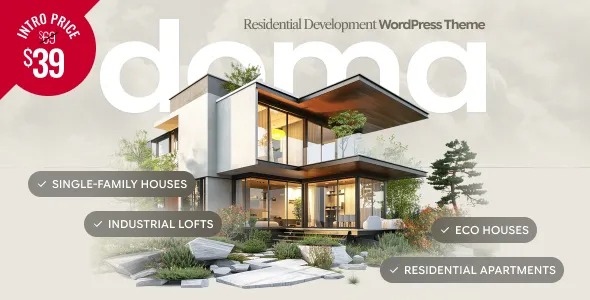
Doma – Real Estate Development WordPress Theme is a professional website solution designed for real estate developers, property development companies, construction businesses, residential project managers, commercial property firms, and real estate investment organizations. Created for businesses involved in property development and the built environment, Doma provides a relevant foundation for presenting development projects, showcasing properties, communicating company expertise, and attracting potential buyers, investors, and business partners.
Real estate development involves much more than selling individual properties. Developers need to communicate project concepts, demonstrate construction progress, introduce residential and commercial opportunities, and establish confidence among prospective buyers and investors. A professional website brings this information together in one accessible place, helping visitors understand a company’s vision, explore its developments, and learn how to make an inquiry.
With Doma – Real Estate Development WordPress Theme, businesses can plan a digital presence that reflects their brand, presents their portfolio, and supports their property marketing activities. Whether you specialize in residential communities, luxury apartments, commercial developments, mixed-use projects, land development, or property investment, Doma can serve as a starting point for creating a structured and informative WordPress website.
A real estate development company needs a website that communicates credibility while presenting its projects in an appealing and understandable way. Potential buyers may want to explore available residences, while investors and commercial clients may be more interested in project scale, development strategy, location, and the company’s experience.
Doma is suited to real estate businesses that want to organize these different types of information into a coherent online experience. A well-planned website can introduce the company, explain its development philosophy, showcase completed properties, highlight ongoing projects, and provide clear contact options.
Rather than presenting every development in the same way, businesses can create dedicated pages for different projects and property categories. Each page can explain the purpose of the development, its location, the types of spaces available, and the features that make the project distinctive.
A professional website also supports consistent communication across marketing channels. Businesses can direct potential customers from advertisements, social media, property brochures, and networking activities to a central destination where they can explore detailed project information.
Doma – Real Estate Development WordPress Theme is relevant to a broad range of businesses involved in planning, developing, marketing, and managing real estate projects.
Potential applications include:
These applications make Doma a relevant theme to consider for businesses that need to communicate property development expertise rather than simply list individual properties for sale.
Residential projects often represent a major part of a developer’s portfolio. Buyers may be interested in apartment complexes, independent houses, villas, gated communities, or larger residential neighborhoods.
Doma can provide a starting point for organizing residential development information into dedicated project pages. These pages can introduce the development concept, describe the property types, explain the location, and highlight relevant facilities or nearby amenities.
For each project, developers can include an overview, architectural imagery, floor plan information where available, property specifications, development status, and inquiry details. Where relevant, the content can also explain the intended audience, such as families, first-time buyers, or customers seeking premium residences.
A well-organized project page helps visitors compare developments and understand which opportunities match their requirements. It also gives the developer a place to publish accurate updates as a project progresses from planning to construction and completion.
All property descriptions should reflect the actual development. Details such as available units, completion dates, specifications, pricing, approvals, and facilities should be verified and updated regularly to prevent misleading information.
Commercial property development serves businesses with different operational needs. Office buildings, retail centers, business parks, warehouses, and mixed-use commercial spaces may each require a distinct presentation.
With Doma, a developer can plan separate pages for commercial projects and explain the intended use, location, layout, accessibility, and available space. This allows business owners, tenants, investors, and corporate decision-makers to explore the relevant information without navigating through unrelated residential content.
A commercial development page may include the project’s purpose, approximate scale, floor layouts, building specifications, parking information, transport access, and available inquiry channels where applicable.
For office developments, visitors may want information about workspace configurations and nearby business facilities. Retail projects may benefit from descriptions of visibility, access, surrounding neighborhoods, and the types of commercial activity the development is intended to support.
A clear presentation helps prospective commercial clients understand the project before contacting the development company. It also supports more focused inquiries by giving visitors useful information at the beginning of the decision-making process.
Luxury real estate projects often require a carefully managed brand presentation. Prospective buyers may evaluate architectural design, materials, privacy, location, amenities, and the overall character of a development before arranging a visit.
Doma can serve as a foundation for presenting premium properties through project descriptions, architectural photography, location information, and clearly organized property details.
Luxury development pages may describe the design concept, residential layouts, shared amenities, landscaped surroundings, and other verified features of the project. High-quality visual content can help visitors understand the character of the development and appreciate its architectural details.
Developers can also introduce the philosophy behind a project, explaining how the design responds to its setting, intended residents, and broader lifestyle considerations.
Premium property marketing should balance aspirational presentation with factual accuracy. Pricing, availability, materials, amenities, and specifications should be described honestly, with clear distinctions between confirmed features and proposed elements.
A cohesive website presentation helps maintain a consistent identity across multiple luxury developments and gives prospective customers a convenient place to review project information.
A real estate development website becomes more useful when each major project has its own dedicated page. Visitors can then explore the development that interests them without having to search through a general portfolio.
Doma can be used as the foundation for a project structure that presents developments according to their type, location, stage, or intended purpose.
An individual project page may include:
Not every project requires every section. A completed commercial building may need a different presentation from a residential development that is still under construction.
A consistent content structure helps visitors understand the information available for each project while making it easier for administrators to maintain the website. It also allows the developer to expand its portfolio over time without making navigation unnecessarily complicated.
Architecture and planning play important roles in real estate development. Buyers and investors may want to understand how a project has been designed, how spaces are arranged, and how the development responds to its surroundings.
Doma can support a website that explains the design thinking behind a development alongside its practical property information.
Project content may discuss building layouts, the use of shared spaces, circulation, natural light, landscaping, accessibility, and the relationship between the development and the surrounding area. When appropriate, architectural drawings, approved plans, and renderings can provide additional context.
Developers may also introduce their planning approach and explain how they coordinate design, engineering, construction, and other professional activities. Such information can help visitors understand the complexity of the development process.
Any claims about approvals, sustainability certifications, construction standards, or technical performance should be supported by accurate documentation. Proposed designs should also be clearly distinguished from completed or approved work.
This combination of visual presentation and useful explanation helps communicate the development’s purpose beyond its exterior appearance.
Property buyers frequently compare developments based on practical features and available amenities. Clear information helps them understand whether a project fits their expectations and lifestyle requirements.
With Doma, developers can plan dedicated sections for property specifications, facilities, and relevant neighborhood information.
Depending on the actual project, these sections may describe parking arrangements, landscaped areas, shared recreational facilities, security provisions, accessibility features, nearby transport links, and other verified amenities.
Residential projects may also explain apartment configurations, storage options, common areas, and the types of facilities available to residents. Commercial developments may focus on building access, shared services, parking, business infrastructure, and available floor space.
Information should be organized into readable sections rather than presented as an unnecessarily long list. Clear labels and concise explanations help visitors locate the details most relevant to their decision.
Because amenities and specifications can vary between projects or property types, each page should reflect the correct information for that specific development.
Real estate projects evolve over time. Buyers, investors, and partners may want to know whether a development is in the planning stage, under construction, nearing completion, or ready for occupancy.
Doma can provide a foundation for publishing project updates that explain significant milestones and keep interested visitors informed.
A development company might publish updates about construction progress, project announcements, newly released property information, completed phases, or changes to expected timelines. Photographs and dated descriptions can help communicate progress in a straightforward way.
A project update section can also support the company’s broader communication strategy by giving visitors a reason to return to the website as developments advance.
Updates should be factual and reviewed before publication. Estimated completion dates, approvals, construction milestones, and availability details should be clearly described according to their actual status.
When a project changes significantly, the relevant main project page should also be updated so that visitors do not encounter conflicting information across different parts of the website.
Property development decisions can involve substantial financial commitments. Potential buyers and investors often want to understand the company behind a project before they make contact.
Doma can be used to introduce the development company through a dedicated About section that explains its background, experience, values, and approach to property development.
The company profile may describe its history, areas of specialization, project portfolio, professional team, and business philosophy. Where applicable, it can also provide verified information about completed developments, relevant qualifications, partnerships, and regulatory credentials.
A portfolio of completed projects can demonstrate the company’s experience and help visitors understand the types of developments it has delivered. Case studies may explain the original development objective, the challenges involved, and the final outcome.
Contact details, office information, and professional communication channels should be easy to locate. These details help visitors confirm the identity of the business and find the appropriate department for their questions.
Trust is strengthened by accurate information and transparent communication rather than unsupported claims or exaggerated promises.
A real estate development website should make it easy for interested visitors to request more information. Some visitors may want to enquire about a specific apartment, while others may be exploring investment opportunities, commercial spaces, or potential development partnerships.
Doma can serve as a starting point for creating clear inquiry pathways throughout the website.
Project pages can include calls to action directing visitors to request property information, schedule a consultation, ask about availability, or contact the sales team. A general contact page can handle broader questions about the company and its portfolio.
An inquiry form may collect a visitor’s name, contact details, preferred project, property type, and a short message describing their requirements. Keep the form focused on the information needed to respond effectively.
Businesses should explain how submitted information will be used and protect customer details appropriately. If leads are managed through a customer relationship management system, a compatible integration may be required.
Online reservations, automated lead assignment, property application workflows, and payment processing should be treated as separate functional requirements and verified through appropriate plugins or external services.
Property development websites may serve investors as well as individual property buyers. Investors often want to understand the company’s development experience, project strategy, target markets, and available opportunities.
Doma can provide a foundation for presenting investment-related company information in a structured and professional manner.
An investment section may introduce the company’s approach to property development, explain relevant project categories, and summarize the business’s experience. Case studies can illustrate completed developments and provide context about the company’s work.
For specific investment opportunities, businesses should present accurate information about the project, its current status, and the nature of the opportunity being discussed. Financial projections, expected returns, risk statements, and regulatory disclosures require particular care and should be reviewed by qualified professionals where necessary.
A website can support communication with potential investors, but it should not imply guaranteed returns or replace the appropriate legal, financial, and due-diligence processes.
A clear investment presentation helps visitors understand the company’s focus and identify the correct channel for further discussions.
Location is a major consideration in real estate decisions. Buyers, tenants, and investors may evaluate transport access, surrounding amenities, nearby commercial areas, educational institutions, and other local factors when comparing properties.
Doma can be used to organize location information alongside individual development pages.
A location section may introduce the surrounding neighborhood, explain relevant access routes, and highlight nearby facilities where verified. Maps or links to mapping services can help visitors understand where a property is situated and how to reach it.
For developments serving a specific region, the website can also provide broader information about the area’s residential or commercial character. This information should remain factual and avoid unsupported claims about future growth, guaranteed appreciation, or investment performance.
Local information is particularly useful when prospective customers are unfamiliar with the development’s location. Clear directions and accurate contact details can also make site visits and consultations easier to arrange.
Search engine optimization helps prospective customers discover a real estate development company through searches related to properties, project types, development services, and locations.
Doma can serve as a foundation for an SEO-focused website when combined with useful content and suitable WordPress configuration.
A practical real estate SEO strategy includes:
A compatible SEO plugin can help manage metadata and other settings. However, search rankings depend on many factors, including competition, content quality, technical health, site authority, and user intent. A theme alone cannot guarantee search visibility or leads.
Property buyers and investors may visit a development website from desktop computers, tablets, and smartphones. The website should make important project information accessible regardless of the device being used.
When implementing Doma, test the presentation of project pages, property details, image galleries, location information, and inquiry forms across different screen sizes.
Readable typography, clear navigation, appropriate spacing, and properly sized images help visitors explore developments without unnecessary friction. Important information such as contact details, project status, and inquiry options should remain easy to locate.
Mobile forms should use understandable labels and controls that are practical to complete on smaller screens. Project photography should be optimized so that visual presentation does not unnecessarily slow down loading.
The actual responsive experience depends on the theme version, its configuration, the content added, installed plugins, and any custom development. Testing the finished website is essential before launch.
WordPress offers a content management environment for creating pages, publishing articles, organizing images, and maintaining website information. This can be valuable for real estate developers who regularly add projects, publish construction updates, or revise property details.
Doma is intended for WordPress-based real estate development websites, making WordPress’s content management workflow relevant to ongoing project marketing.
A business can organize the site around company information, development services, residential projects, commercial properties, investment information, news, and contact pages. Consistent page structures make it easier to introduce new developments while preserving a clear navigation system.
The exact editing tools, page builder compatibility, demo import options, and included plugins should be confirmed through the theme’s official documentation. Advanced requirements such as searchable property listings, map-based searches, user accounts, appointment scheduling, and payment integrations may require compatible plugins or custom development.
Before implementation, review the theme’s technical requirements, licensing terms, update policy, documentation, and compatibility with the plugins the project needs. This helps establish a practical website plan based on verified capabilities.
Real estate development websites often include high-resolution photography, project galleries, architectural renderings, downloadable brochures, and detailed property pages. These elements should be managed carefully to maintain a reliable browsing experience.
When implementing Doma, choose suitable WordPress hosting and optimize images before uploading them. Use appropriate image dimensions, avoid unnecessary plugins, and consider compatible caching tools where useful.
Regular backups help protect project descriptions, images, website settings, and other important content. Updates to WordPress, the theme, and installed plugins should be handled carefully, with appropriate testing for critical business pages.
Security practices should include strong administrator passwords, suitable user permissions, trusted software sources, and secure configuration of forms and integrations. Any collection of customer or investor information should follow responsible data-handling practices.
Routine maintenance should also include checking inquiry forms, reviewing project availability, updating construction information, and removing outdated promotions. Accurate content is particularly important for property businesses because customers may rely on the website when making important decisions.
Performance and security depend on the complete website environment, including hosting, configuration, plugins, content, and ongoing maintenance, rather than on the theme alone.
Doma is worth considering for businesses that need a website focused on property development, project presentation, and real estate marketing. Its development-oriented positioning makes it relevant to companies that want to showcase residential and commercial projects while communicating their experience and services.
It may suit property developers creating a new corporate website, established real estate businesses updating their digital presence, agencies building project websites for development clients, and consultants presenting property-related services.
A successful implementation combines an appropriate theme with accurate project details, high-quality visual content, clear service descriptions, trustworthy company information, and convenient inquiry options.
Before choosing Doma for a live project, review its actual layouts, editing workflow, responsive behavior, documentation, licensing, and compatibility with any required property or lead-management plugins. Confirm that the selected theme and supporting tools can deliver the website structure and functionality your business needs.
Doma – Real Estate Development WordPress Theme provides a real estate development-focused starting point for building a professional WordPress website for property developers, residential construction businesses, commercial development firms, and real estate investment organizations.
By bringing together company information, development projects, property details, architectural imagery, location information, construction updates, and inquiry options, businesses can create an informative online destination for prospective buyers, investors, and professional partners.
A successful property development website requires more than attractive visuals. Accurate project information, organized navigation, mobile usability, responsible communication, and regular maintenance all contribute to a useful and credible online presence.
For businesses seeking to present their development portfolio and communicate their real estate expertise, Doma is an option to evaluate when building a website that combines project storytelling, professional branding, and property-focused communication.
All digital products are the most recent version at the time of purchase, with no possibility of free updates beyond the initial purchase.
After payment, we will upload the product file within 24 to 48 hours and most of time under 12 hour.
From multipurpose themes to niche templates